
What is Software Testing? A Complete Beginner’s Guide

What is software testing and why is it important? Software testing ensures that applications are bug-free, secure, and reliable. This beginner-friendly guide explains software testing, its types, and how manual and automation testing work in real projects.
Software testing is one of the most important parts of software development. Every application you use—mobile apps, websites, banking systems, shopping apps—goes through software testing before reaching users. Without proper testing, software can fail, cause security issues, or lose customer trust.
What is Software Testing?
Software testing is the process of checking whether a software application works correctly and meets business requirements. It helps identify bugs, errors, and missing features before the product is released.
In software testing, testers ensure:
- The application works as expected
- The software is stable and secure
- The user experience is smooth
- Bugs are fixed before users face them
In simple words, testing in software engineering ensures quality.
Why is Software Testing Important?
Software testing helps companies:
- Reduce business risks
- Improve customer satisfaction
- Avoid production failures
- Maintain software quality
Without testing, even a small bug can cause major losses. That’s why software testing strategies are carefully planned in every IT project.
Types of Software Testing
There are many types of software testing, but they can be broadly divided into two categories.
- Manual Testing
- Automation Testing
Both play a key role in the software development life cycle.
What is Manual Testing?
Manual testing is the process where testers execute test cases manually without using any automation tools.
In manual testing and automation testing, manual testing usually comes first.
Key activities in manual testing:
- Understanding requirements
- Creating test cases in software testing
- Executing test cases manually
- Reporting bugs
- Performing system testing in software testing
Manual testing is very useful for:
- Exploratory testing
- UI testing
- Ad-hoc testing
- User acceptance testing
What Is Automation Testing?
Automation testing is the process of using tools and scripts to execute test cases automatically.
Automation testing in software testing reduces human effort and increases speed and accuracy.
Examples:
- Running Selenium scripts
- API automation testing
- Mobile app automation testing
- Regression testing
Difference Between Manual and Automation Testing
Understanding the difference between manual and automation testing is very important for beginners.
Manual Testing:
- Performed by humans
- Slower execution
- Good for small projects
- Flexible for UI changes
Automation Testing:
- Performed using scripts and tools
- Faster execution
- Ideal for large projects
- Best for repetitive tests
This manual vs automation testing comparison helps you decide which approach to use.
What Is Automation Testing in Software Testing?
Automation testing means using automated software testing tools to validate application functionality.
It is commonly used when:
- Test cases are repetitive
- Builds are released frequently
- Large data sets are involved
Which process requires automated builds and testing?
- Continuous Integration (CI)
- Continuous Delivery (CD)
These processes rely heavily on test automation in software testing.
Automation Testing Tools List
Here are some popular automation testing tools:
Web Automation:
- Selenium automation testing
- Playwright
- Cypress
API Testing:
- API automation testing tools like Postman, RestAssured
Mobile Automation:
- Appium (mobile app automation testing)
ETL Testing:
- ETL automation testing tools
These tools help test automation engineers build reliable automation frameworks.
Selenium Automation Testing
Selenium automation testing is one of the most widely used automation tools.
It supports:
- Java automation testing
- Python
- C++
- Multiple browsers
Why Selenium is popular:
- Open-source
- Strong community
- Supports automation testing services
- Used in most automation testing courses
API Automation Testing
API testing automation focuses on backend testing.
In API automation testing, testers verify:
- API responses
- Status codes
- Data accuracy
- Performance
Popular API automation testing tools include:
- Postman
- RestAssured
- SoapUI
Types of Automation Testing
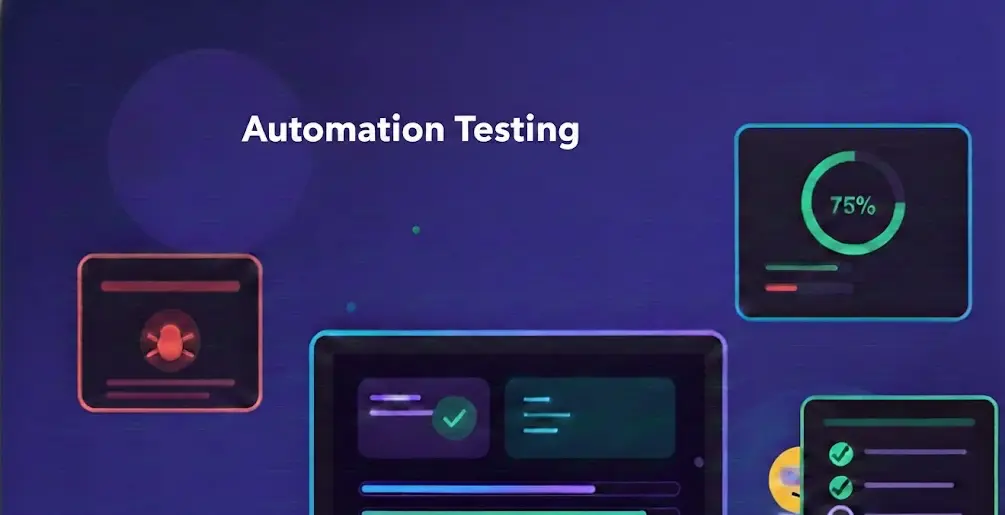
There are many types of automation testing used in projects:
- Regression testing
- Smoke testing
- Sanity testing
- Performance testing
- Security testing in software testing
Each type ensures different aspects of quality.
Advantages of Automation Testing
Some major advantages of automation testing are:
- Faster execution
- Reduced manual effort
- Better test coverage
- Reliable results
- Reusability of test scripts
These are also the main benefits of automation testing.
Challenges in Automation Testing
Automation is powerful, but it has challenges:
- High initial setup cost
- Script maintenance
- Tool limitations
- Requires programming skills
Understanding these challenges in automation testing helps testers plan better.
Automation Testing Skills Required
To become a test automation engineer, you need:
- Programming knowledge (Java automation testing preferred)
- Understanding of software testing
- Knowledge of automation testing tools
- Framework design skills
- Debugging and problem-solving
Automation Testing Roadmap
A simple test automation roadmap for beginners:
- Learn software testing basics
- Understand manual testing concepts
- Learn Java basics
- Learn Selenium automation testing
- Practice test automation
- Learn API automation testing
- Prepare for automation testing interview questions
This roadmap helps beginners grow step by step.
Automation Testing Interview Questions
Some common automation testing interview questions include:
- What is automation testing?
- Difference between manual and automation testing?
- What are automation testing tools?
- Explain Selenium automation testing
- What are the benefits of automation testing?
Preparing basic automation testing interview questions builds confidence.
Automation Testing Salary in India
The automation testing salary in India depends on experience.
- Freshers: ₹3–5 LPA
- 2–4 years: ₹6–10 LPA
- Senior engineers: ₹12+ LPA
This makes automation testing a strong career option.
Software Testing Concepts You Must Know
Along with automation, you should understand:
- Test plan in software testing
- Verification and validation in software testing
- Software testing strategies
- Types of software testing
- System testing in software testing
These concepts form the foundation of software testing in software engineering.
Final Thoughts
Understanding software testing is the first step toward a QA career. Both manual testing and automation testing are important and work together in real projects.
If you want to grow faster:
- Start with manual testing
- Move to automation testing
- Learn tools like Selenium
- Practice real projects
Software testing is not just about finding bugs—it’s about delivering quality software.
Frequently Asked Questions (FAQ)
1.Best software testing tools for automation in India?
In India, popular automation testing tools include Selenium, Cypress, TestNG, Playwright, and Appium. These tools are widely used because they are reliable, scalable, and supported by strong communities, making them suitable for startups, enterprises, and service-based companies.
2.What are the leading platforms for managing test cases and suites?
Leading test management platforms include TestRail, Zephyr, qTest, and PractiTest. These tools help teams organize test cases, track execution, manage defects, and generate reports, making collaboration easier for QA teams working on small or large projects.
3.How to choose a software testing company for large projects?
When choosing a software testing company for large projects, check their domain experience, testing frameworks, automation skills, security expertise, and client reviews. A good company should offer scalable solutions, clear communication, and strong reporting to handle complex project requirements.
4.Compare open-source vs paid software testing platforms?
Open-source testing tools are cost-effective and flexible but need skilled teams for setup and maintenance. Paid testing platforms offer better support, built-in features, and integrations. The right choice depends on budget, project size, timelines, and the level of support needed.
5.Resources for learning API testing with a popular open-source tool?
To learn API testing with open-source tools like Postman or RestAssured, check official documentation, YouTube channels (like Automation Step-by-Step), Udemy courses, and GitHub repositories. Practicing on public APIs and building small automation frameworks helps in mastering these tools effectively.
6.Best practices for writing effective bug reports?
An effective bug report should include a clear title, steps to reproduce, expected and actual results, screenshots or logs, and environment details. Writing simple, precise descriptions helps developers understand issues quickly and fix them without confusion or repeated clarification.
7.How to test mobile apps for performance and security?
Mobile app performance and security testing involves checking speed, stability, battery usage, and data protection. Test under different network conditions, devices, and OS versions. Security testing focuses on data encryption, authentication, and preventing unauthorized access or data leaks.
8.What certifications are highly valued for a career in software quality engineering?
Highly valued certifications include ISTQB, Certified Software Tester, and Agile testing certifications. These credentials validate testing knowledge, best practices, and industry standards, helping professionals improve credibility, career growth, and job opportunities in quality engineering roles.
9.How to integrate continuous testing in DevOps pipelines?
Continuous testing in DevOps is integrated by automating tests and running them at every stage of the pipeline. This includes unit, API, and UI tests triggered through CI tools. It helps detect issues early and ensures faster, reliable software releases.
10.How does continuous integration impact the software testing lifecycle?
Continuous integration improves the testing lifecycle by enabling frequent code testing and faster feedback. Automated tests run with every code change, helping teams catch bugs early, reduce manual effort, and maintain consistent software quality throughout development and deployment.